Name and job title: Peter Barker, freelance writer, author and editor.

How did you get started in automotive journalism? I started writing for MiniWorld magazine in 1994, on the basis that I knew a fair bit about Minis, owned several of them and could write better than most of the magazine’s contributors!

What’s been your most memorable car review or feature piece? I had the pleasure of interviewing Raymond Baxter (Guild member and renowned BBC commentator – Ed) in 2001 along with photographer Paul Harmer. Due to Raymond’s health, we had only one hour in which to interview and photograph him. It was a challenge for a novice journalist to interview and photograph someone as experienced as Raymond, but we managed it and the resulting interview feature was one that I am proud of.

Which motoring story or investigation are you most proud of? In 2021 I wrote an article for CooperWorld magazine (the magazine of the Mini Cooper Register) in which I examined the Beeching cuts to British Railways and the simultaneous expansion of Britain’s motorway network under the supervision of then Minister of Transport Ernest Marples. The story required extensive research; reading the published papers of the British Railways Board (to which my grandfather was an advisor) and finding a copy of the Beeching Report, so that the article was as factually correct as possible. The resulting 1,500-word article was compact and (I hope) readable, although it contained a good deal of information.

How has motoring journalism changed since you started? When I started 30 years ago people were prepared to buy print magazines and to read articles up to 3,000 words in length without complaint. Now print magazines are fast disappearing and any piece over 500 words is considered long. It is a challenge for modern-day motoring journalists to provide quality output with such constrictions.

What was the first car or motorcycle you ever owned? A 1967 Mini Cooper, unsurprisingly!

Do you have a dream car or other vehicle you’d love to own or drive? I have a secret desire to drive a 1963 Ford Falcon Sprint (but don’t tell anyone).

What’s the best road trip you’ve ever been on? In 1970 I rode with my father as he drove our Peugeot 404 estate car the length of Uganda on dirt roads. It was the most thrilling ride for a nine-year old boy, and introduced me to car control on loose surfaces (second-hand of course).

Which motoring event do you always look forward to? The Rallye Monte-Carlo Historique. I have competed in 16 editions of this wonderful international historic rally organised by the Automobile Club of Monaco.

What’s the biggest challenge facing automotive writers today? Changing audiences and readership habits.

Where do you see the future of automotive journalism heading? Shorter, quicker interventions using multi-media.

How do you think vehicle manufacturers could improve their media engagement? Be more realistic about their products: the hype around some new cars is ridiculous.

What’s the strangest or funniest thing that’s happened to you on a car launch? I don’t generally cover car launches, but I was witness to BMW’s launch of the rally version of the MINI Cooper S at MINI Plant Oxford in 2012. It was clear that the star driver, Chris Meeke, was very capable but that the car had developmental faults. It would be fair to say that the atmosphere was pretty tense…

If you could swap jobs with someone in the industry for a day, who would it be? Sam Buckingham, Press Officer for MINI UK.

What’s your go-to driving music or podcast? Radio 3.

Name and job title: Andrew Noakes, freelance motoring writer and automotive journalism lecturer

How did you get started in automotive journalism? I’m told the first word I ever said was ‘car’ so it was inevitable that I would end up doing something automotive. I went to Loughborough University to do a degree in Automotive Engineering thinking that it might lead to an interesting motor industry job, and if it didn’t it might help me become a motoring writer.

While I was there I spotted an ad for a job at a now-defunct magazine called Car Design and Technology, so I sent them my CV and some article ideas. It turned out they had already filled the post, but editor Anthony Curtis liked my ideas and suggested I write for them as a freelance. More freelancing followed, and eventually I had an impressive enough collection of clippings that I could walk into an interview at Fast Car magazine and come out with a job as staff writer. I became technical editor, then deputy editor, then launched what became Classics Monthly for the same publisher. 

After eight years I decided to go back to freelancing, which I’ve been doing ever since. My latest freelance gig is as editor of Race Engine Technology magazine.

Alongside that, from 2006 I’ve been running the Automotive Journalism Masters degree course at Coventry University. It has produced about 130 graduates in that time – 90 per cent of them going on to careers in automotive media or the motor industry, which is an incredible success rate. The university found me by looking through the Guild Year Book.

What’s been your most memorable car review or feature piece? The ones that I remember are often the ones where something went wrong. Like the Lotus Carlton that broke on the way to the shoot, and we had to get a colleague to drive to Luton, pick up Vauxhall’s own car, and drive it down to our shoot in Surrey so we could use it for an hour or so before he drove it all the way back. 

A classic Aston Martin broke down on the morning of the shoot but fortunately for us the owner was a leading light in the Aston Martin Owners Club, so I asked him to find us a replacement car. He located one just a few miles from our shoot, and the owner was happy for us to borrow the car. The bad news was that he was away on business, but his wife was at home and could hand over the car if we could fetch it. I had to convince the owner’s wife that we were who we said we were and it wasn’t an elaborate ruse to steal the car, extricate it from the very narrow garage where it was kept and race back to Longcross with it. 

There was a Lotus that the owner had just finished restoring after years of painstaking work. When we arrived he had driven it just 14 miles, to the MOT station and back. When he drove it down the road for us a wheel fell off, mangling the bodywork on one side. We put the wheel back on and shot all the pictures from the other side.

Which motoring story or investigation are you most proud of? As technical editor of Fast Car I was involved in a lot of product testing, and one of the best stories was a proper comparison of air filters. It’s one of the most popular car modifications and one where choices are often made based on opinion and brand image rather than facts. 

Most magazine tests just bolt on the filter and see if it liberates any extra power, but there’s no point having a filter which flows lots of air but doesn’t do much filtering, or one which filters well when new but quickly gets blocked up by dust. To do a proper test you have to look at the pressure drop when the filter is new, how much dust it filters from the air, and the pressure drop after dust exposure. I persuaded MIRA to help us do a robust comparison test like this on all the aftermarket air filters, the most thorough test any magazine had ever done.

How has motoring journalism changed since you started? Nobody had heard of the internet back then. It has transformed journalists’ opportunities to research, fact check and communicate. The stories we produce now are richer and better-informed as a result. It has also changed the way readers consume news, of course, forcing the industry to change with it and squeezing profit margins. 

Digital photography has also made an enormous difference – in the film days we would shoot 20 rolls of Fuji Provia (more than 700 pictures) in a day and not know until 24 hours later when they came out of processing whether any of them were sharp. Now you know instantly.

What was the first car or motorcycle you ever owned? A Vauxhall Nova 1.3SR, which ended up as a Fast Car cover car. One of the first things I did with it was drive to a Vauxhall dealer to buy a part. I parked it, got out, and one of the dealer personnel reversed a car into it, right in front of me. I’d had it less than a week.

Do you have a dream car or other vehicle you’d love to own or drive? Lots, but I’ll give you three specific vehicles. One is GJ 3811, the ex-Woolf Barnato Bentley Speed Six coupé – the one that is called the ‘Blue Train Bentley’. It is featured in the well-known Terence Cuneo painting with the car and the train, even though Barnato in fact raced the train in a different car and their routes never coincided. 

The second is 40 MT, Aston Martin’s development car for the DB4 GT Zagato. It has the Zagato-spec engine and lightweight chassis, but in a regular GT body. The third is 555 VAR, a Lotus Cortina prototype with Elan-style independent rear suspension. It was loaned to Jim Clark to test and he liked it so much he kept it!

What’s the best road trip you’ve ever been on? When the original Audi TT came out I took one to Northern Ireland to drive around the Ulster TT road courses at Newtownards and Dundrod. It was just after County Antrim motorcycle racer Joey Dunlop was killed in a racing accident, and I remember there were tributes to him pinned to the fence near the startline on the Dundrod circuit. The scenery was marvellous, the people were lovely and it was fascinating to drive in the wheeltracks of greats like Nuvolari, Caracciola, Fangio and Moss, and piece together the story of these great road races. 

Which motoring event do you always look forward to? Receipt of a new MOT certificate.

What’s the biggest challenge facing automotive writers today? Convincing publishers to pay enough for their services to make writing a viable occupation. There are magazines today paying the same word rates that they were paying when I went freelance in 2002. That’s a 50 per cent cut in real terms.

Where do you see the future of automotive journalism heading? AI isn’t going away, but AI can’t experience and assess real, physical sensations. It has no capability for critical thought, no concern for accuracy, proportionality or balance, and no empathy with a reader. Ask it to write a road test of a car and it will give you an article which is grammatically correct but lacking in substance and integrity. For that you need a human. But how will a reader be able to tell if what they are reading is AI-generated dross or authoritative content? I suspect they will turn to media brands they know and respect, so Autocar, Evo, CAR, Top Gear and such will still have a future.

The other challenge to the status quo is the way the motor industry is changing. Viable, affordable autonomous cars may still be a way off but they will come, and they will disrupt everything. There will be no need to own a car – whenever you need one you will just order it up on a phone app and it will drive itself to your door, like an autonomous Uber. 

How do you think vehicle manufacturers could improve their media engagement? Motoring journalists are supported by what is, generally, an incredibly good automotive PR machine. Motor industry PR is far better than PR in some other subject areas, where it can be a struggle just to find out the basics about a product or get hold of a publishable picture.

Where some of them could improve is to consider the quality of an audience rather than just its size. It may sound impressive to get millions of views but if none of those viewers is likely to buy the product or service you’re promoting, it’s pointless. An audience which is smaller, but full of engaged potential customers, is much more valuable.

What’s the strangest or funniest thing that’s ever happened on a car launch?Years ago I sat down to lunch with a friend at an SMMT test day, on one of those big round tables that has space for about a dozen people. Opposite was a motoring magazine editor, and the person next to him was reminding him that he once interviewed them for a job, but turned them down. The person next to them then said he’d turned him down for a job, too. Then the person next him, then the next – we went all the way around the table, and it turned out he’d rejected every single one of us, me included. He got smaller and smaller as we went around the table.

Flying back from a launch in the south of France I once made the mistake of asking the geriatric mutter rotter in the seat next to me how he got into the industry. He began, “Well, in 1948…” After a while I dozed off but as the plane came in to land I woke up, and he was still talking. “Then in 1971…”

If you could swap jobs with someone in the industry for a day, who would it be? Rawdon Glover, MD of Jaguar. It would remind me how easy my job is.

What’s your go-to driving music or podcast? All sorts of things. For a podcast with endless enthusiasm and interest I’d go for Matt Prior and Steve Cropley’s My Week in Cars. For driving music, Tom Petty or Fleetwood Mac always hit the spot.

Chris becomes the latest to contribute to our initiative to help with member recognition and making introductions easier at industry events, by revealing a bit more about members than can be gleaned from their Year Book entry. We would welcome further entries – simply pen your answers to the questions below and send with a suitable landscape-shaped photo to the editorial office.

Name and job title: Chris Rees – Editor of Auto Italia and Motors Editor of The Ferrari Magazine.

How did you get started in automotive journalism? I got chatting to a publisher at a car show when I was just 18, and he suggested I write for one of his titles, Alternative Cars. I wrote a piece that, to my surprise, got published. That led to summer university break work at the magazine and the eventual offer of a job post-uni.

What’s been your most memorable car review or feature piece? Probably my first ever car launch (Citroën AX GT) but otherwise driving the Maserati Levante Trofeo through the Arabian desert – unforgettable.

Which motoring story or investigation are you most proud of? Probably my motoring books, such as Magnificent Seven (the story of the Lotus/Caterham Seven), because so much original research is required. Book authorship makes you more aware of how important it is to go to original sources for authentic stories and information that readers can rely on.

How has motoring journalism changed since you started? The delivery and telling of stories has drastically changed for most journalists, who must now be social media commentators, online news hounds and often videographers, too, as well as journalists in the traditional sense. When I started, I wrote all my stories by hand and passed them on to a typist.

What was the first car or motorcycle you ever owned? A Bond Bug three-wheeler which I drove every day to sixth form college. Then I sold it because it tried to kill me.

Do you have a dream car or other vehicle you’d love to own or drive? Alfa Romeo 33 Stradale. I’ve sat in the Alfa Museum’s 1967 example but never had the chance to drive one. It’s my number one car in the world: unsurpassed beauty, motorsport underpinnings and ultra-rare. 

What’s the best road trip you’ve ever been on? Last year’s drive in my Triking Moto Guzzi trike from the UK to the southern tip of Sardinia and back was exhilarating and exhausting in equal measure. Every minor disaster – and they inevitably happen – gives you a story to tell.

Which motoring event do you always look forward to? Our very own Auto Italia Italian Car Day at Brooklands in May – it always delivers surprises.

What’s the biggest challenge facing automotive writers today? Getting a foot in the door. Don’t be afraid to knock on as many doors as you can, and roll with the inevitable rejections.

Where do you see the future of automotive journalism heading? ‘Content creation’ is superseding pure journalism but I hope there will always be a place for good writing.

How do you think vehicle manufacturers could improve their media engagement? Keeping in contact with journalists of all varieties is important – print, channels, influencers. 

What’s the strangest or funniest thing that’s ever happened on a car launch? Being ‘treated’ to a town crier at every turn on a launch; throughout the day, he rang his bell and bellowed bellicosely in our ears. Still no idea why. 

If you could swap jobs with someone in the industry for a day, who would it be? Head of car design at Ferrari. Not that I can sketch to save my life. 

What’s your go-to driving music or podcast? Robert Fripp & Brian Eno’s Evening Star.

This is the second in our new Member Profile initiative to help with recognition and making introductions easier at industry events by revealing a bit more about members than can be gleaned from their Year Book entry.

If you’d like to take part simply send to the News Briefs editor with a suitable landscape-shaped photo.

Name and job title: George Loveridge, editor and creator of Driving Around, motoring correspondent for Travel News Update, writer for gearnews.com, freelance photographer, guitar teacher and gigging guitarist. 

How did you get started in automotive journalism? I started  when I was 15, taking photos for Practical Classics magazine. My dad, Guy Loveridge, was writing several features on the restoration of an Austin 16 that he would later take around Europe covering seven capital cities across seven days. I supplied a large number of the photos. 

What’s been your most memorable car review or feature piece? For all the wrong reasons, my most memorable car review is the KGM Torres EVX. Having just moved into a new house, I had this car on loan at the time. Sadly, the 12-volt battery died, which caused the car to deadlock itself, but it still had enough battery to trigger the alarm in the early hours of the morning and the car had to be dragged off the drive. Hello new neighbours!

Which motoring story or investigation are you most proud of? I’m most proud of my piece comparing our 1956 Morgan Plus 4 to a contemporary model. Being able to persuade Morgan to loan the vehicle and then putting it next to an older model was very exciting and interesting. 

How has motoring journalism changed since you started? Since I started taking on press cars in 2021, electric vehicle loans are a lot more common. Plus, it’s getting harder still to get hold of vehicles to review, and generally my audience are bored of electric vehicles as they’re becoming so common.

What was the first car or motorcycle you ever owned? The first car that I ever had a V5 for was a 1929 Austin 7 Cambridge Special that had been in the family since the 1970s until 2005, and it was then reacquired in 2017 when I became the custodian of it. 

Do you have a dream car or other vehicle you’d love to own or drive? I would love to own, or at least drive, a Jaguar F-Type R. Having seen photos of it in 2013 when I was younger, everything about it appealed to me. 

What’s the best road trip you’ve ever been on? The best road trip has to be when I took my, at the time new to me by four days, 2003 Jaguar XJ6 down to Brighton and Eastbourne from West Yorkshire to cover a motoring event. I had had the car for very little time, and it was my first big trip in the big cat. 

Which motoring event do you always look forward to? I always look forward to The Holme Moss Hill Climb, an event that I have co-organised since 2020. It’s a relaxed day for car enthusiasts that helps to raise £1000s for The Yorkshire Air Ambulance.

What’s the biggest challenge facing automotive writers today? I believe that the biggest challenge  is the level of cooperation from press teams. Unless you’re already established, or are writing for a prestigious outlet, it’s very hard to convince manufacturers to play ball.

Where do you see the future of automotive journalism heading? It looks like it’ll be heading entirely online. Even now, you can make more money from a 12-second highlights video on YouTube or TikTok than selling a few hundred magazine copies. 

How do you think vehicle manufacturers could improve their media engagement? If manufacturers were as open as possible about all aspects of their new models, then their engagement would surely increase. 

What’s the strangest or funniest thing that’s ever happened on a car launch? Whist attending the KGM Actyon launch in January 2025, I took one of the test vehicles to Castle Combe Circuit, only to find that although there wasn’t anyone at the circuit, everything was ‘open’. Therefore, I was not only able to get some photos of the KGM in the paddock, but if I’d have been brave enough, I could have driven on track. Again, not a soul in sight…

If you could swap jobs with someone in the industry for a day, who would it be? Mat Watson seems to have a pretty good gig. 

What’s your go-to driving music or podcast? I always enjoy listening to The AutoAlex Podcast or even Simon Mayo’s Confessions on long journeys. However, I have a special rock mix for spirited driving, featuring The Beatles, Motley Crue, AC/DC, Golden Earring and the like – the good stuff. 

Name and job title: Simon Harris, head of valuations, Vehicle Data Global, chair of Guild of Motoring Writers.

How did you get started in automotive journalism? I got my first job in journalism in 1996, at a local weekly newspaper in Stamford. The newspaper had a monthly Motoring Extra section with editorial to help support local car dealer advertising. 

After a while, I asked the editor if I could take on this section with more objective reporting and car reviews rather than printing news releases, and he agreed, so long as I wrote copy in my own time. I also had to use my holiday allocation to attend car launches.

What’s been your most memorable car review or feature piece? I was technically the first journalist to drive a Peugeot 407 after being invited, along with Richard Bremner writing for Autocar, on an event several weeks before the media launch. I was writing for Fleet News, and Peugeot had two cars they could make available for supervised drives from the company’s Mulhouse factory. As I got into the car at the front, I pulled away a couple of seconds before Richard, so that counts as ‘first’ in my book! The internet wasn’t such a big deal in those days and there was no social media, so it was good to get driving impressions published the same week as Autocar.

Which motoring story or investigation are you most proud of? I don’t think I’ve ever written anything that changed the world. Not in automotive at least! One thing you get to look out for is how interviewees phrase things, so that the story is often in what they don’t say. For example, when freelancing, I managed to get a story about a model built at a UK factory being discontinued published twice because the product manager was vague about its expected replacement. There was no formal announcement about it for almost a year afterwards.

How has motoring journalism changed since you started? I started writing solely about automotive in 2000. Although I’d been a journalist for several years, my Fleet News job was the first one where I had my own email address! There was very little focus on anything digital back then, although Fleet News was one of the first automotive publications to have a website in 1997. But all the extra technology and exposure through increased channels means we work much harder now than we ever did. Can you imagine being an automotive writer before the internet, with only weekly, or maybe even monthly print deadlines? Launches would have been a much more relaxed affair.

What was the first car or motorcycle you ever owned? I was quite late to car ownership, not having taken my driving test until I was almost finished at university, and then spending four years on an appallingly low reporter’s salary on a local newspaper. Then with frequent test cars, it was a while before I got around to buying my own car. When I did, it was a 1973 Jensen SP auto, which I had for five years. The best fuel consumption I ever managed from the 7.2-litre V8 engine was 13.6mpg.

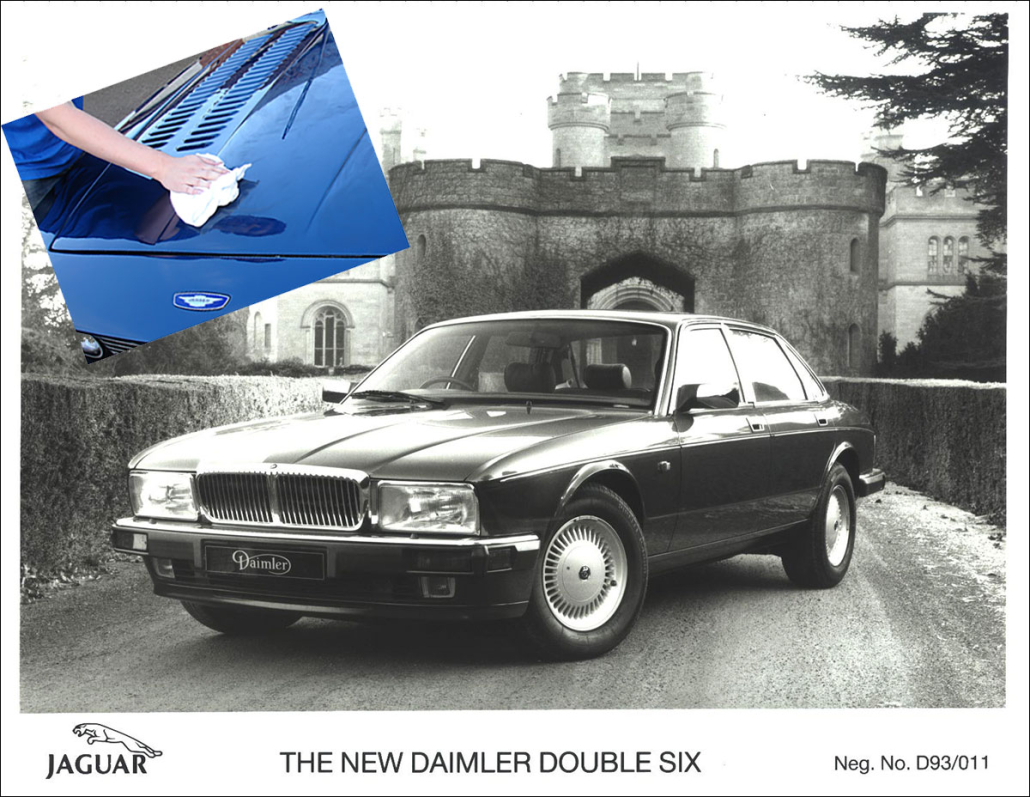
Do you have a dream car or other vehicle you’d love to own or drive? I’ve owned a few nice cars, but nothing with 12 cylinders yet. I quite like the tale behind the Jaguar XJ40, engineered specifically not to accommodate a V-engine for fear of cost cutting landing it with Rover’s V8. But the brand was spun off before the XJ40 was launched, and at the time the 12-cylinder engine was still important for North American customers – to the extent that the XJ Series 3 had to continue alongside the XJ40 to keep a V12 saloon in the Jaguar range. In the early 1990s, with barely two years of its life left to run, the XJ40 finally became available with Jaguar’s 6.0-litre V12, either as an XJ12 or a Daimler Double Six. Either of those would be fine for me.

What’s the best road trip you’ve ever been on? Road trips aren’t what they used to be, with heavier traffic now, many areas with lower speed limits than they used to have, and annoying delays for roadworks. But I’ve had a few enjoyable long drives. In 2008, Mercedes-Benz held the global launch of the updated SL in California, and the driving route took us from Santa Monica to Palm Springs. But I enjoy driving when I’m not working, and I’ve done Canadian road trips many times.

Which motoring event do you always look forward to? It has to be the Guild Big Day Out, which has been at Castle Combe for the last few years. If you don’t know why, maybe you haven’t attended, in which case you should.

What’s the biggest challenge facing automotive writers today? One is working harder than ever for relatively less money, being squeezed by publishers and commissioning editors. Another is as brands increasingly turn to influencer marketing as a promotional tool rather than independent reviews, bona fide journalists are finding access reduced. 

I could go on all day about this, but one more is keeping up to date with rapidly advancing technology in the automotive while being able to cut through the hype and understand its true worth. We’re still waiting for the fully autonomous vehicles we were promised by 2020, as well as hydrogen fuel cells superseding other power formats – which many were talking about 25 years ago.

Where do you see the future of automotive journalism heading? Everyone knows the world is changing much faster than it ever has, and this includes automotive. Technology, legislation, climate and culture are all connected with automotive writing. Although we are competing with influencers and AI-generated copy, readers still appreciate honesty, clarity and the stories that matter to them. We need to hold our ground on independence, but stay curious about the landscape we work in. Although the tools have changed, our mission is the same.

How do you think vehicle manufacturers could improve their media engagement? One thing I have noticed at big events, such as SMMT Test Day at Millbrook, since becoming Guild chair, is that some PRs will do their best to hide from a face-to-face meeting if they haven’t responded to a recent email or a call, or they think you’re going to ask them to sponsor something. I’ve seen them turn and walk the other way or hide at the back of the hospitality unit. But usually I just want to say hello. 

We really do understand that PR budgets aren’t what they were, and we accept that. And we appreciate the job is busier than it ever was with smaller teams. But the complaint I get most often from Guild members and others is not responding to emails or voicemails. We really need to work together to make this better somehow.

What’s the strangest or funniest thing that’s ever happened on a car launch? I’ve heard a few tales of outrageous things happening, but personally, on my first launch abroad, I got stranded on a beach in Sicily as my co-driver, who needed to do photography, had identified the perfect framing for this metallic blue Fiat Punto HGT against the golden sand, sapphire sea and azure sky. 

As he went to move the car to position it better in the frame, it sunk in the bone dry sand up to its brake discs. We tried for what seemed like an eternity, but was more like half an hour, to push and pull the car out of its position. Throughout this, a police car with three officers sitting inside, waited in the beach car park where the occupants observed our efforts. Eventually they got out and offered to help, and after a few more minutes of struggling and heaving we were on our way again. We arrived at lunch 40 minutes late with a very dusty looking car.

If you could swap jobs with someone in the industry for a day, who would it be? Given that I’m exposed to the world of residual values in my day job, I would love to find out who thought it was such a great idea to ramp up EV registrations in the UK with targets for manufacturers with no thought to who would be the customers of these vehicles on the used market. I would job swap and come up with a package of initiatives to make it easier for used car buyers to transition to EVs where they could.

What’s your go-to driving music or podcast? I tend to listen to music playlists when I’m on the road, or BBC Radio 2.