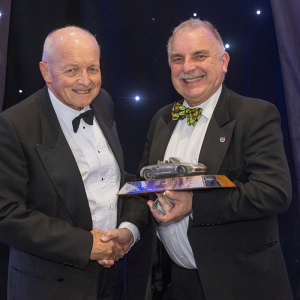
Guild member profile – Andrew Noakes
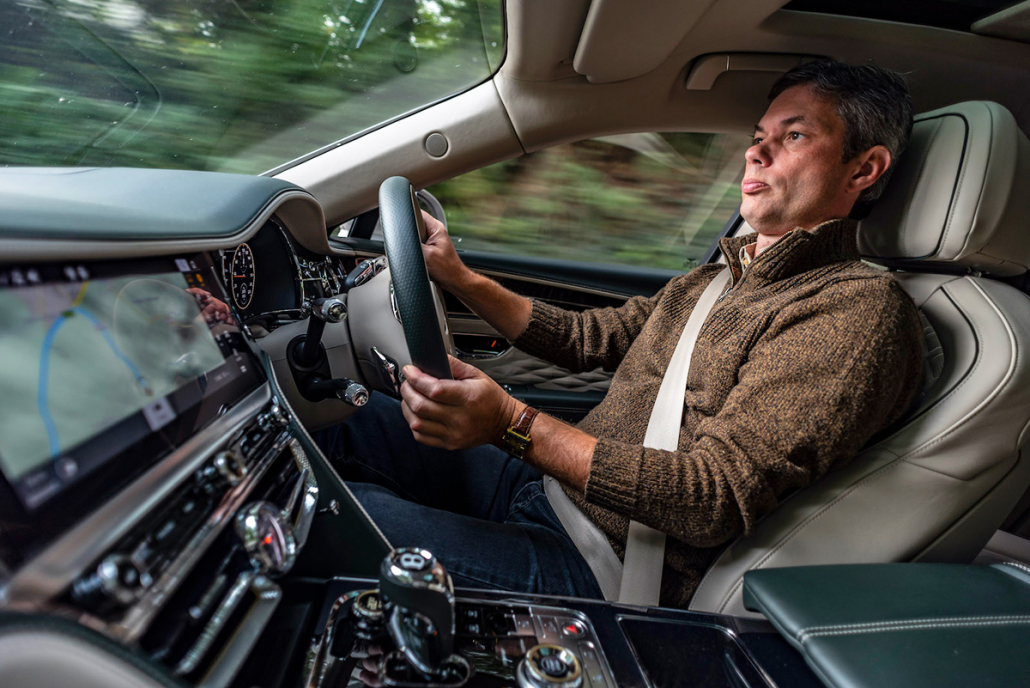
Name and job title: Andrew Noakes, freelance motoring writer and automotive journalism lecturer
How did you get started in automotive journalism? I’m told the first word I ever said was ‘car’ so it was inevitable that I would end up doing something automotive. I went to Loughborough University to do a degree in Automotive Engineering thinking that it might lead to an interesting motor industry job, and if it didn’t it might help me become a motoring writer.
While I was there I spotted an ad for a job at a now-defunct magazine called Car Design and Technology, so I sent them my CV and some article ideas. It turned out they had already filled the post, but editor Anthony Curtis liked my ideas and suggested I write for them as a freelance. More freelancing followed, and eventually I had an impressive enough collection of clippings that I could walk into an interview at Fast Car magazine and come out with a job as staff writer. I became technical editor, then deputy editor, then launched what became Classics Monthly for the same publisher.
After eight years I decided to go back to freelancing, which I’ve been doing ever since. My latest freelance gig is as editor of Race Engine Technology magazine.
Alongside that, from 2006 I’ve been running the Automotive Journalism Masters degree course at Coventry University. It has produced about 130 graduates in that time – 90 per cent of them going on to careers in automotive media or the motor industry, which is an incredible success rate. The university found me by looking through the Guild Year Book.
What’s been your most memorable car review or feature piece? The ones that I remember are often the ones where something went wrong. Like the Lotus Carlton that broke on the way to the shoot, and we had to get a colleague to drive to Luton, pick up Vauxhall’s own car, and drive it down to our shoot in Surrey so we could use it for an hour or so before he drove it all the way back.
A classic Aston Martin broke down on the morning of the shoot but fortunately for us the owner was a leading light in the Aston Martin Owners Club, so I asked him to find us a replacement car. He located one just a few miles from our shoot, and the owner was happy for us to borrow the car. The bad news was that he was away on business, but his wife was at home and could hand over the car if we could fetch it. I had to convince the owner’s wife that we were who we said we were and it wasn’t an elaborate ruse to steal the car, extricate it from the very narrow garage where it was kept and race back to Longcross with it.
There was a Lotus that the owner had just finished restoring after years of painstaking work. When we arrived he had driven it just 14 miles, to the MOT station and back. When he drove it down the road for us a wheel fell off, mangling the bodywork on one side. We put the wheel back on and shot all the pictures from the other side.
Which motoring story or investigation are you most proud of? As technical editor of Fast Car I was involved in a lot of product testing, and one of the best stories was a proper comparison of air filters. It’s one of the most popular car modifications and one where choices are often made based on opinion and brand image rather than facts.
Most magazine tests just bolt on the filter and see if it liberates any extra power, but there’s no point having a filter which flows lots of air but doesn’t do much filtering, or one which filters well when new but quickly gets blocked up by dust. To do a proper test you have to look at the pressure drop when the filter is new, how much dust it filters from the air, and the pressure drop after dust exposure. I persuaded MIRA to help us do a robust comparison test like this on all the aftermarket air filters, the most thorough test any magazine had ever done.
How has motoring journalism changed since you started? Nobody had heard of the internet back then. It has transformed journalists’ opportunities to research, fact check and communicate. The stories we produce now are richer and better-informed as a result. It has also changed the way readers consume news, of course, forcing the industry to change with it and squeezing profit margins.
Digital photography has also made an enormous difference – in the film days we would shoot 20 rolls of Fuji Provia (more than 700 pictures) in a day and not know until 24 hours later when they came out of processing whether any of them were sharp. Now you know instantly.
What was the first car or motorcycle you ever owned? A Vauxhall Nova 1.3SR, which ended up as a Fast Car cover car. One of the first things I did with it was drive to a Vauxhall dealer to buy a part. I parked it, got out, and one of the dealer personnel reversed a car into it, right in front of me. I’d had it less than a week.
Do you have a dream car or other vehicle you’d love to own or drive? Lots, but I’ll give you three specific vehicles. One is GJ 3811, the ex-Woolf Barnato Bentley Speed Six coupé – the one that is called the ‘Blue Train Bentley’. It is featured in the well-known Terence Cuneo painting with the car and the train, even though Barnato in fact raced the train in a different car and their routes never coincided.
The second is 40 MT, Aston Martin’s development car for the DB4 GT Zagato. It has the Zagato-spec engine and lightweight chassis, but in a regular GT body. The third is 555 VAR, a Lotus Cortina prototype with Elan-style independent rear suspension. It was loaned to Jim Clark to test and he liked it so much he kept it!
What’s the best road trip you’ve ever been on? When the original Audi TT came out I took one to Northern Ireland to drive around the Ulster TT road courses at Newtownards and Dundrod. It was just after County Antrim motorcycle racer Joey Dunlop was killed in a racing accident, and I remember there were tributes to him pinned to the fence near the startline on the Dundrod circuit. The scenery was marvellous, the people were lovely and it was fascinating to drive in the wheeltracks of greats like Nuvolari, Caracciola, Fangio and Moss, and piece together the story of these great road races.
Which motoring event do you always look forward to? Receipt of a new MOT certificate.
What’s the biggest challenge facing automotive writers today? Convincing publishers to pay enough for their services to make writing a viable occupation. There are magazines today paying the same word rates that they were paying when I went freelance in 2002. That’s a 50 per cent cut in real terms.
Where do you see the future of automotive journalism heading? AI isn’t going away, but AI can’t experience and assess real, physical sensations. It has no capability for critical thought, no concern for accuracy, proportionality or balance, and no empathy with a reader. Ask it to write a road test of a car and it will give you an article which is grammatically correct but lacking in substance and integrity. For that you need a human. But how will a reader be able to tell if what they are reading is AI-generated dross or authoritative content? I suspect they will turn to media brands they know and respect, so Autocar, Evo, CAR, Top Gear and such will still have a future.
The other challenge to the status quo is the way the motor industry is changing. Viable, affordable autonomous cars may still be a way off but they will come, and they will disrupt everything. There will be no need to own a car – whenever you need one you will just order it up on a phone app and it will drive itself to your door, like an autonomous Uber.
How do you think vehicle manufacturers could improve their media engagement? Motoring journalists are supported by what is, generally, an incredibly good automotive PR machine. Motor industry PR is far better than PR in some other subject areas, where it can be a struggle just to find out the basics about a product or get hold of a publishable picture.
Where some of them could improve is to consider the quality of an audience rather than just its size. It may sound impressive to get millions of views but if none of those viewers is likely to buy the product or service you’re promoting, it’s pointless. An audience which is smaller, but full of engaged potential customers, is much more valuable.
What’s the strangest or funniest thing that’s ever happened on a car launch?Years ago I sat down to lunch with a friend at an SMMT test day, on one of those big round tables that has space for about a dozen people. Opposite was a motoring magazine editor, and the person next to him was reminding him that he once interviewed them for a job, but turned them down. The person next to them then said he’d turned him down for a job, too. Then the person next him, then the next – we went all the way around the table, and it turned out he’d rejected every single one of us, me included. He got smaller and smaller as we went around the table.
Flying back from a launch in the south of France I once made the mistake of asking the geriatric mutter rotter in the seat next to me how he got into the industry. He began, “Well, in 1948…” After a while I dozed off but as the plane came in to land I woke up, and he was still talking. “Then in 1971…”
If you could swap jobs with someone in the industry for a day, who would it be? Rawdon Glover, MD of Jaguar. It would remind me how easy my job is.
What’s your go-to driving music or podcast? All sorts of things. For a podcast with endless enthusiasm and interest I’d go for Matt Prior and Steve Cropley’s My Week in Cars. For driving music, Tom Petty or Fleetwood Mac always hit the spot.